
Global Demand for Indian Sandalwood
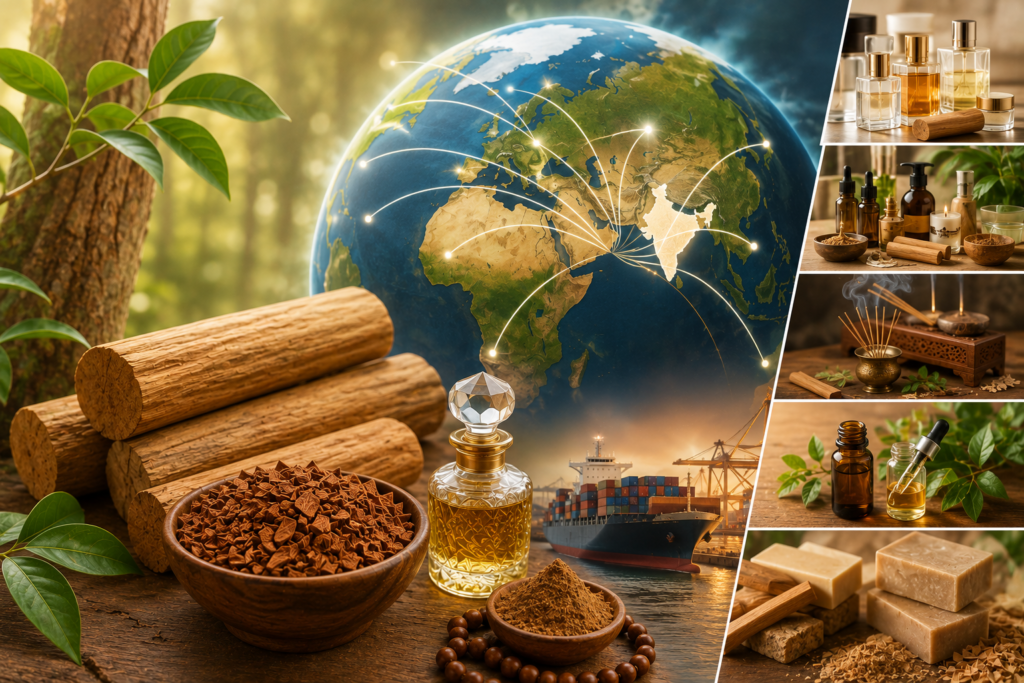
Indian Sandalwood has quietly grown into one of the most sought-after natural raw materials in the world, feeding industries as varied as luxury perfumery, skincare, pharmaceuticals, and religious goods. What was once primarily a regional resource tied to South Indian temples and royal courts has become a genuinely global commodity, traded across continents and prized by manufacturers far beyond its native range. This blog looks at where global demand for Indian Sandalwood is coming from, how the market is evolving, and what’s shaping its future.
A Market on a Steady Growth Trajectory
Market research firms track the global sandalwood industry differently, and estimates of its total size vary considerably depending on methodology and scope, some reports value the broader sandalwood products market in the hundreds of millions of dollars, while others that include wood, powder, and derivative products place it well over a billion dollars annually. Despite this variation in absolute numbers, nearly every major industry report agrees on one thing: sandalwood demand is on a consistent upward trajectory, with most forecasts projecting annual growth rates in the high single digits over the coming decade.
This growth is being driven by a combination of factors: rising consumer preference for natural and plant-derived ingredients, expanding use in wellness and skincare products, and continued strong demand from traditional and religious markets across Asia and the Middle East.
Key Industries Driving Demand
Global demand for Indian Sandalwood is spread across several major industry categories, each contributing to overall market growth in different ways.
Fragrance and Perfumery – Sandalwood remains a cornerstone ingredient in luxury perfumery, valued for its role as a natural fixative that extends the longevity of fragrances. A significant share of global luxury fragrance brands include sandalwood notes in their product lines, reflecting its continued importance in high-end scent formulation.
Cosmetics and Personal Care – The cosmetics and personal care sector represents one of the largest and fastest-growing demand segments for sandalwood, driven by its use in anti-inflammatory skincare formulations, anti-aging products, and natural beauty lines. Rising consumer interest in Ayurvedic and botanical skincare ingredients has further accelerated this trend, particularly in markets like the United States and parts of Europe.
Pharmaceuticals and Wellness – Sandalwood’s traditional therapeutic reputation has translated into growing use within pharmaceutical and wellness product formulations, particularly in aromatherapy and natural remedy markets, as consumers increasingly seek products they perceive as gentler and more natural alternatives to synthetic options.
Religious and Cultural Products – Demand for sandalwood powder, paste, and incense remains strong across religious and cultural markets, particularly in India, Southeast Asia, and the Middle East, where sandalwood continues to play a central role in temple worship, ceremonial practices, and traditional attar-based perfumery.
Where the Demand Is Coming From
While India remains the historical and cultural home of Santalum album, global trade data shows demand coming from a wide range of countries. Trade analysis covering recent shipment data indicates that Indian Sandalwood exports reach well over a hundred countries worldwide, with countries like Vietnam, Malaysia, and Mexico accounting for a particularly large share of global import volumes, alongside steady demand from established markets in the Middle East, East Asia, and Western fragrance and cosmetics hubs.
Asia Pacific continues to represent the largest overall regional market for sandalwood products, driven by both deep-rooted cultural demand and expanding domestic cosmetics and pharmaceutical industries, while North America and Europe contribute significant demand from the luxury fragrance and premium skincare segments.
India's Position as a Global Supplier
Despite growing competition from Australian sandalwood cultivation, India remains one of the world’s most important sources of high-quality sandalwood, particularly prized for its superior oil concentration and fragrance intensity compared to other Santalum species. India’s sandalwood industry, historically centered around Karnataka and parts of the Western Ghats, continues to supply a substantial share of the world’s sandalwood oil, even as Australia has emerged as a major production hub supported by large-scale, scientifically managed plantations.
Efforts like the establishment of a dedicated Sandalwood Oil Processing and Marketing Corporation in India, aimed at streamlining production and improving pricing structures for farmers, reflect ongoing attempts to strengthen India’s position in this competitive global market.
Pricing and Supply Constraints
Global demand for sandalwood continues to significantly outpace available supply, largely due to the tree’s multi-decade maturation period. This imbalance has kept sandalwood oil prices notably high and volatile, with reported prices for quality sandalwood oil ranging widely depending on grade, origin, and market conditions, often placing it among the more expensive essential oils traded globally.
Export restrictions and quota systems imposed by producing countries, including periodic regulatory measures in India aimed at protecting domestic sandalwood resources, add further complexity to global supply chains, occasionally contributing to short-term price volatility for international buyers.
The Rise of E-Commerce and Direct-to-Consumer Sales
One notable shift in recent years has been the growing role of e-commerce in sandalwood product sales. Producers and brands increasingly sell sandalwood oil, skincare products, and incense directly to consumers through online platforms, bypassing traditional distribution channels. This shift has been particularly strong across Asia Pacific markets, where online sandalwood sales have grown at a rapid pace, reflecting broader consumer trends toward digital purchasing and direct brand engagement.
Challenges Facing the Global Market
Despite strong demand, the global sandalwood industry faces several ongoing challenges:
- Supply scarcity: The tree’s long maturation period means supply cannot quickly respond to rising demand, creating persistent scarcity.
- Counterfeit and adulterated products: Rising demand, particularly through e-commerce channels, has led to increased instances of diluted or synthetic products falsely marketed as pure sandalwood.
- Regulatory complexity: Export restrictions and shifting quota systems in producing countries can create supply chain uncertainty for international buyers.
- Competition from synthetics: Lab-created sandalwood fragrance compounds continue to gain market share in cost-sensitive segments, presenting long-term competitive pressure on natural sandalwood producers.
The Push Toward Sustainable Supply Chains
As global awareness of sandalwood’s conservation challenges grows, both producers and buyers are placing increasing emphasis on sustainably sourced sandalwood. Certified plantation-grown sandalwood, transparent supply chains, and third-party sustainability certifications are becoming more important factors for international buyers, particularly in premium cosmetics and fragrance markets where brand reputation and ethical sourcing claims carry significant consumer weight.
Looking Ahead
As global demand for natural, traceable, and sustainably sourced ingredients continues to rise, Indian Sandalwood is well-positioned to remain a valuable, globally traded commodity for years to come. However, meeting this demand sustainably will require continued investment in plantation-based cultivation, improved disease management, and stronger international cooperation around ethical sourcing practices, ensuring the industry can grow without repeating the overharvesting patterns of the past.
Conclusion
The story of global demand for Indian Sandalwood reflects a broader shift happening across many natural product industries: rising consumer interest in authentic, plant-based ingredients colliding with the hard realities of limited, slow-growing supply. As fragrance houses, skincare brands, and wellness companies around the world continue to seek out genuine Santalum album, the industry’s ability to balance this growing global appetite with sustainable, long-term supply will likely define the next chapter of sandalwood’s remarkable journey.