Recent Scientific Research on Indian Sandalwood
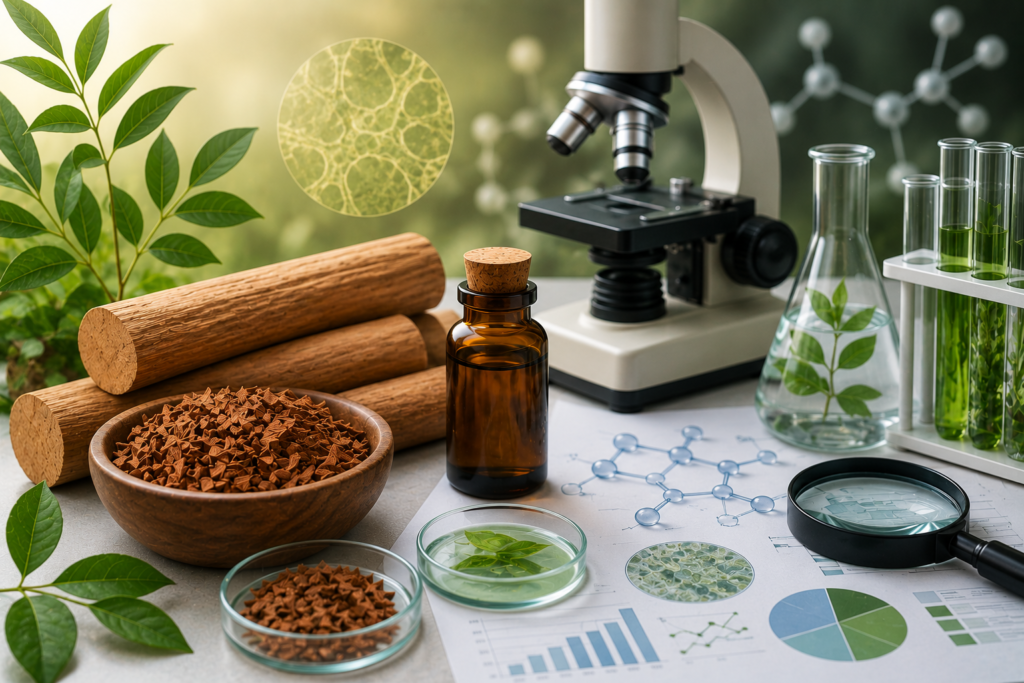
For thousands of years, Indian Sandalwood (Santalum album) has been valued based largely on tradition, cultural practice, and centuries of anecdotal use. But in recent years, a growing body of scientific research has started to catch up, using modern tools like genome sequencing, antimicrobial testing, and clinical-style trials to better understand what makes this tree so unique. This blog rounds up some of the most notable recent research on sandalwood, spanning genetics, pharmacology, conservation, and cultivation.
Mapping the Sandalwood Genome
One of the most significant recent developments in sandalwood research has been advances in genome sequencing. Researchers have successfully produced an improved, chromosome-level genome assembly of Indian Sandalwood, organizing the vast majority of its genetic material into distinct chromosome-level segments with a high completeness score. This kind of detailed genetic mapping gives scientists a foundational resource for understanding how sandalwood biologically produces its prized aromatic oils at a molecular level.
This genomic work builds on earlier research identifying specific genes responsible for producing santalol, the primary aromatic compound in sandalwood oil, through a class of enzymes that convert simpler plant compounds into the fragrant molecules found in mature heartwood. With a clearer genetic blueprint, researchers hope to eventually support breeding programs aimed at developing trees with higher oil content or faster maturation rates, without compromising fragrance quality.
Genomic Selection to Speed Up Breeding
Related to genome mapping, recent research has also explored how genomic selection techniques, commonly used in crop and livestock breeding, might be applied to sandalwood breeding programs. Because sandalwood takes 15 to 30 years to mature, traditional breeding approaches that rely on waiting for trees to fully develop before selecting the best specimens are extremely slow and costly.
By using genetic markers to predict desirable traits, such as oil content or growth rate, earlier in a tree’s life, researchers aim to accelerate sandalwood breeding programs considerably, potentially reducing the time needed to develop improved cultivars for commercial plantations.
Genetic Diversity and Conservation Concerns
Alongside genomic advances, several recent studies have focused on assessing genetic diversity within wild sandalwood populations, particularly in regions facing conservation pressure. Research examining sandalwood populations in Indonesia, for example, has used genetic marker analysis to evaluate population structure among remaining wild trees, highlighting ongoing concerns about reduced genetic diversity driven by decades of overharvesting and habitat fragmentation.
These findings reinforce the importance of conservation-focused cultivation efforts, since a shrinking genetic pool in wild populations could eventually limit the species’ long-term resilience against disease, climate shifts, or other environmental pressures.
Antimicrobial and Antibacterial Studies
Modern laboratory research continues to explore and validate sandalwood’s traditional reputation as an antimicrobial agent. Recent studies testing sandalwood leaf extracts against common pathogenic bacteria, including E. coli and Staphylococcus aureus, have found measurable inhibition effects, with some research reporting notably strong antibacterial activity against certain bacterial strains at relatively low extract concentrations.
Other studies have explored more advanced applications, including research into nanoparticles synthesized using sandalwood leaf extracts, which have shown promising antimicrobial effects against a range of bacterial species in laboratory testing. While these studies are still largely confined to lab settings rather than clinical human trials, they provide growing scientific support for sandalwood’s long-standing use in traditional wound and skin care.
Skin Health and Anti-Aging Research
Recent research has also examined sandalwood’s potential cosmetic and dermatological benefits in more depth. Some studies have specifically explored formulations aimed at improving skin resilience and reducing visible signs of aging, reporting encouraging outcomes related to fine lines and overall skin texture when sandalwood-based preparations were applied consistently.
Separately, researchers have investigated sandalwood powder’s potential effects on cholesterol levels in patients with hypercholesterolemia, an area of research that extends sandalwood’s studied applications beyond topical skin use and into broader areas of metabolic health, though this research remains preliminary and requires further validation through larger studies.
Why This Research Matters?
This wave of modern scientific research matters for a few key reasons:
- Validating traditional use: Antimicrobial and dermatological studies are beginning to scientifically support centuries-old traditional applications of sandalwood.
- Supporting conservation: Genetic diversity research helps guide better conservation strategies for dwindling wild populations.
- Improving cultivation: Genomic research and breeding studies could eventually lead to higher-yielding, more resilient sandalwood varieties, helping ease supply pressures.
- Guiding investment and policy: Market and cultivation studies help farmers, investors, and policymakers make more informed, sustainable decisions about future sandalwood production.
The Road Ahead
While recent research has made meaningful progress, much of the current scientific work remains in early or laboratory stages, particularly regarding sandalwood’s potential health benefits. Larger-scale clinical studies, expanded genetic breeding programs, and continued conservation research will likely shape the next phase of sandalwood science in the coming years. As global demand for sandalwood continues to grow, this ongoing research will play a crucial role in ensuring the species can be cultivated sustainably without repeating the overharvesting mistakes of the past.
Conclusion
Indian Sandalwood’s transition from a tree understood mostly through tradition to one increasingly studied through modern genomics, microbiology, and clinical research reflects its enduring global significance. As scientists continue to unlock the genetic and chemical secrets behind its prized fragrance and therapeutic properties, this research offers hope for a future where sandalwood can be both scientifically understood and sustainably produced for generations to come.