
Indian Sandalwood vs Synthetic Sandalwood
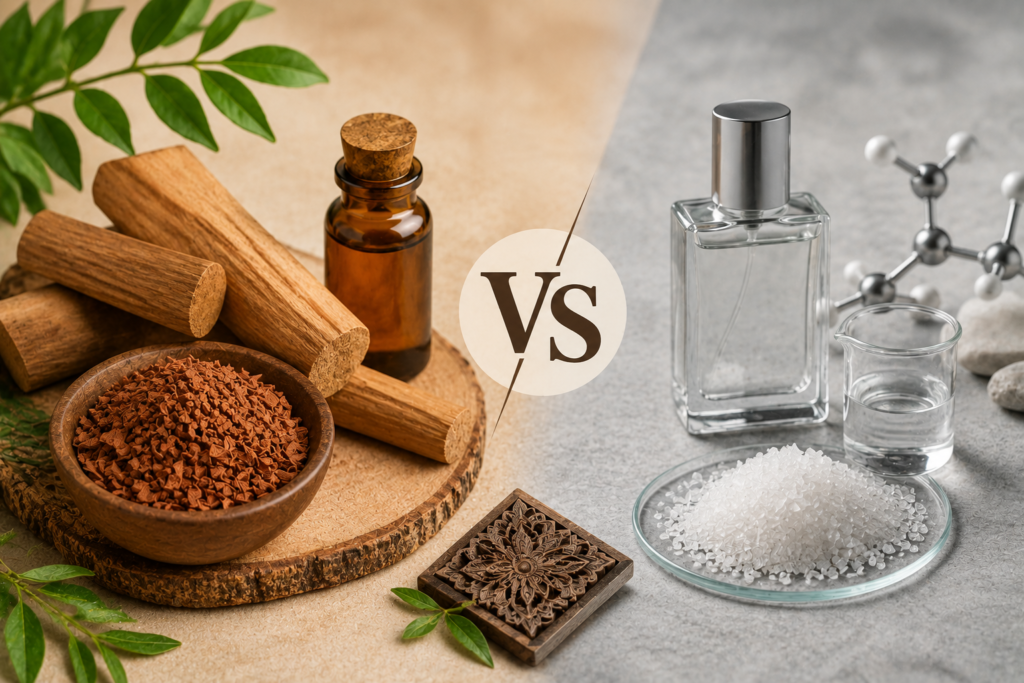
Indian Sandalwood vs Synthetic Sandalwood is a comparison worth understanding, especially when shopping for perfumes, cosmetics, skincare products, or fragrances. Walk into almost any perfume or cosmetics store, and you’ll find numerous products marketed with a “sandalwood” scent. However, many of these products contain synthetic sandalwood compounds rather than genuine Indian Sandalwood. Due to the high cost and limited availability of authentic Indian Sandalwood, synthetic alternatives have become widely used in mass-market fragrances and personal care products. But how closely do these lab-created substitutes match the natural ingredient? This blog explores the key differences between Indian Sandalwood and synthetic sandalwood, helping you understand their origins, fragrance profiles, benefits, and what you are actually buying.
Why Synthetic Sandalwood Exists
Genuine Indian Sandalwood oil is extraordinarily expensive, largely due to the tree’s 15 to 30 year maturation period, its hemi-parasitic growth requirements, and decades of overharvesting that depleted wild populations. With rising global demand for sandalwood’s distinctive scent across perfumery, cosmetics, and household products, manufacturers needed a way to meet demand without relying entirely on limited, costly natural supply.
This led to the development of synthetic sandalwood compounds, lab-created molecules designed to mimic sandalwood’s aroma at a fraction of the cost, without depending on slow-growing trees.
How Synthetic Sandalwood Is Made
Synthetic sandalwood fragrances are typically created through chemical synthesis, engineering molecules that replicate specific aspects of sandalwood’s scent profile. Some well-known synthetic sandalwood compounds include:
- Javanol: A popular synthetic compound known for closely mimicking the creamy, woody notes of natural sandalwood oil.
- Sandalore: Another widely used synthetic sandalwood molecule, valued for its clean, long-lasting woody scent.
- Ebanol: Known for producing a smooth, sandalwood-like aroma often used in modern perfumery.
These compounds are created in laboratories through organic chemistry processes, allowing manufacturers to produce consistent, scalable quantities without the years-long wait required for natural sandalwood cultivation.
Key Differences Between Natural and Synthetic Sandalwood
- Scent Complexity
Genuine Indian Sandalwood oil contains a complex mixture of naturally occurring compounds, primarily alpha and beta-santalol, along with numerous trace compounds that contribute to its rich, multi-layered fragrance. Synthetic versions, while often impressively close, typically replicate only specific aspects of this scent profile, sometimes resulting in a less nuanced or slightly one-dimensional aroma compared to the real thing.
2. Longevity on Skin
Natural sandalwood oil is known for its excellent fixative properties, helping other fragrance notes last longer when applied to skin. While some synthetic compounds are specifically engineered to replicate this long-lasting quality, natural sandalwood oil is often still regarded as superior in terms of how it evolves and lingers over several hours.
3. Cost
This is perhaps the most obvious difference. Genuine Indian Sandalwood oil can cost significantly more per unit than synthetic alternatives, sometimes several times more, depending on quality and sourcing. Synthetic sandalwood compounds allow manufacturers to offer sandalwood-scented products at a fraction of the price, making them accessible for mass-market perfumes, soaps, and household products.
4. Therapeutic Properties
One major distinction lies in sandalwood’s traditional medicinal applications. Natural sandalwood oil contains bioactive compounds associated with anti-inflammatory and antibacterial properties, which have been used in traditional medicine for centuries. Synthetic sandalwood compounds, designed purely to replicate scent, typically lack these therapeutic properties, making them unsuitable for medicinal or Ayurvedic applications.
5. Sustainability Considerations
Interestingly, synthetic sandalwood can actually offer a more sustainable alternative in certain contexts, since it doesn’t require harvesting slow-growing trees or contribute to pressure on wild sandalwood populations. For mass-market products where the full therapeutic or cultural significance of natural sandalwood isn’t the primary concern, synthetic alternatives can help reduce demand pressure on limited natural resources.
Where You're Likely to Encounter Synthetic Sandalwood
Given its lower cost and consistent supply, synthetic sandalwood is commonly used in:
- Mass-market perfumes and body sprays
- Scented candles and household fragrance products
- Budget-friendly soaps and body washes
- Some cosmetic and skincare products marketed with “sandalwood” scent, though not necessarily therapeutic sandalwood extract
Genuine Indian Sandalwood oil, on the other hand, is typically reserved for high-end perfumes, premium skincare products, Ayurvedic medicine, and traditional religious or ceremonial use, where authenticity and therapeutic properties matter more than cost savings.
How to Tell the Difference
If you’re trying to determine whether a product contains real Indian Sandalwood or a synthetic alternative, consider the following:
- Check the ingredient list: Genuine products should list “Santalum album oil” specifically, while synthetic versions often list compound names like Javanol, Sandalore, or simply “fragrance.”
- Consider the price: If a product claims to contain pure sandalwood oil but is priced very low, it’s likely synthetic or heavily diluted.
- Evaluate the scent: Natural sandalwood tends to have a deeper, more complex, evolving aroma, while synthetic versions can sometimes smell slightly flatter or more one-dimensional, though high-quality synthetics can be very convincing.
- Look for certification: Reputable brands using genuine sandalwood oil often provide sourcing information or lab testing results (such as GC-MS analysis) to verify authenticity.
Is Synthetic Sandalwood a Bad Thing?
It’s worth noting that synthetic sandalwood isn’t inherently a negative choice. For consumers primarily interested in the scent alone, particularly in affordable everyday products like candles or body sprays, synthetic sandalwood offers a practical, cost-effective, and more sustainable option. The key is transparency, ensuring products are clearly labeled so consumers can make informed choices based on their specific needs, whether that’s therapeutic benefits, cultural authenticity, or simply an enjoyable fragrance at an accessible price point.
Conclusion
The choice between Indian Sandalwood and synthetic sandalwood ultimately comes down to what you’re looking for. If you need the full therapeutic, cultural, or traditional benefits associated with genuine Santalum album, natural sandalwood oil remains unmatched. However, for everyday fragrance applications where cost and sustainability are bigger priorities, synthetic sandalwood offers a reliable, accessible alternative. Understanding these differences ensures you can make informed choices, whether you’re buying a luxury perfume, a scented candle, or a bottle of therapeutic sandalwood oil.