How Do Indian Sandalwood Trees Grow?
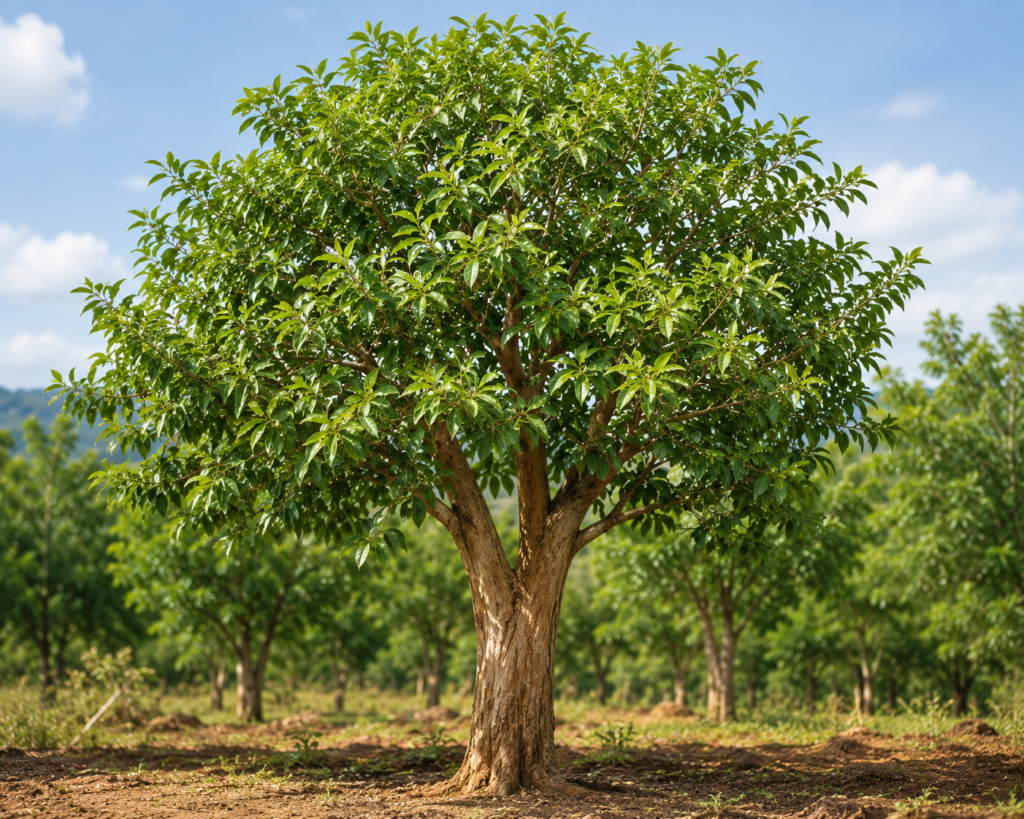
Indian Sandalwood (Santalum album) is one of the most unusual trees in the plant kingdom — not because of how it looks, but because of how it lives. Unlike most trees that grow independently by drawing nutrients from soil through their own root systems, sandalwood relies on a biological partnership with other plants to survive. Understanding this growth process explains why the tree takes so long to mature and why cultivating it successfully requires patience, planning, and the right ecological conditions.
A Hemi-Parasitic Tree: What Does That Mean?
The most important thing to understand about sandalwood is that it’s classified as a hemi-parasitic plant. This means it performs photosynthesis on its own, like any normal tree, but it cannot obtain all the water and nutrients it needs independently. Instead, its roots form connections called haustoria that attach to the root systems of nearby “host” plants, drawing essential nutrients and minerals from them.
Without a suitable host, a sandalwood sapling will struggle to grow, become weak, and often fail to survive past its early years. This dependency is why sandalwood cultivation isn’t as simple as planting a seed and waiting — it requires careful ecological planning from day one.
Choosing the Right Host-Plants
Farmers and foresters growing sandalwood must select appropriate host trees to plant alongside their saplings. Hosts are typically chosen based on their root structure, growth rate, and nitrogen-fixing properties. Common host plants used in sandalwood cultivation include:
- Short-term hosts: Fast-growing plants like Cajanus cajan (pigeon pea) or various leguminous shrubs, planted in the early years to support young saplings.
- Long-term hosts: Larger, more established trees such as Casuarina, Acacia, or Pongamia, which continue supporting the sandalwood tree as it matures over decades.
Typically, multiple host plants are used across different growth stages, since a sandalwood tree’s nutrient needs change significantly as it ages from a young sapling into a mature tree.
Germination and Early Growth
Sandalwood is usually propagated from seeds collected from mature trees. These seeds require specific pre-treatment, often involving soaking or scarification, to improve germination rates. Once germinated, seedlings are typically grown in nurseries for several months before being transplanted alongside their designated host plants.
During the first two to three years, sandalwood saplings grow relatively quickly compared to later stages, focusing energy on establishing their root connections with host plants and building a stable trunk structure. This early period is critical, as the survival rate of sandalwood saplings depends heavily on how well the host-plant relationship is established.
The Slow Road to Maturity
After the initial establishment phase, sandalwood growth slows considerably. It typically takes 15 to 30 years for a tree to develop the dense, oil-rich heartwood that makes it commercially valuable. During this time, the tree undergoes several developmental phases:
- Sapwood formation (Years 1-10): The tree primarily develops sapwood, the lighter, outer part of the trunk, which contains minimal oil.
- Heartwood development (Years 10-20): As the tree matures, the inner core begins converting into heartwood, gradually accumulating the aromatic oils responsible for sandalwood’s characteristic scent.
- Oil concentration peak (Years 20-30+): The oldest, most mature trees develop the highest concentration of santalol, the primary aromatic compound in sandalwood oil, making them the most valuable for harvesting.
This gradual internal transformation is why younger sandalwood trees, even if fully grown in height and girth, are far less valuable than older ones with well-developed heartwood.
Ideal Growing Conditions
Indian Sandalwood thrives in specific environmental conditions, which is part of why its natural range is concentrated in South India. Ideal growing conditions include:
- Climate: Warm, tropical to subtropical climates with moderate rainfall, typically between 600 to 1,600 mm annually.
- Soil: Well-drained, slightly alkaline to neutral soils, though sandalwood can tolerate a range of soil types as long as drainage is adequate.
- Sunlight: Full sun exposure is essential, particularly in the tree’s early growth stages.
- Elevation: Sandalwood grows well at elevations ranging from sea level up to around 1,000 meters, though optimal growth is often seen in the 600 to 900 meter range found across parts of Karnataka and Tamil Nadu.
Common Challenges in Cultivation
Growing sandalwood isn’t without its difficulties. Farmers and plantation managers often face several challenges throughout the tree’s long growth cycle:
- Host plant management: Ensuring the right hosts are available at each growth stage requires ongoing monitoring and sometimes replanting.
- Pest and disease pressure: Sandalwood is susceptible to certain pests and diseases, including spike disease, a phytoplasma infection that can severely stunt growth and reduce oil quality.
- Theft and illegal harvesting: Given its high value, mature sandalwood trees are frequently targeted by thieves, requiring plantations to invest in security measures.
- Long investment horizon: The multi-decade wait for returns makes sandalwood cultivation a long-term commitment that not all farmers or investors are equipped to handle.
Harvesting Practices
When a sandalwood tree finally reaches maturity, harvesting is done carefully to maximize the yield of valuable heartwood. Unlike many trees that are simply cut down, sandalwood is often uprooted entirely, since even the roots contain valuable oil-rich wood. After harvesting, the wood is typically graded based on color, oil content, and size before being processed for oil extraction or carving.
The Push Towards Sustainable Cultivation
Given the ecological and economic importance of sandalwood, there’s been a growing shift toward sustainable, plantation-based cultivation rather than relying on wild harvesting. Organizations and private companies across India and countries like Australia have developed structured cultivation programs that carefully manage host plants, soil health, and pest control to improve both yield and sustainability.
These efforts aim to meet rising global demand for sandalwood products while reducing pressure on dwindling wild populations, ensuring the tree’s availability for future generations.
Conclusion
The growth of Indian Sandalwood is a slow, intricate process shaped by its unique biology and specific environmental needs. From its dependence on host plants to the decades-long wait for oil-rich heartwood to develop, every stage of its growth reflects why this tree is so difficult to cultivate — and why the end product is so highly valued. Understanding this growth journey offers a deeper appreciation for every sandalwood-based product, knowing the years of patience and careful cultivation behind it.