
Economic Impact of Indian Sandalwood on India
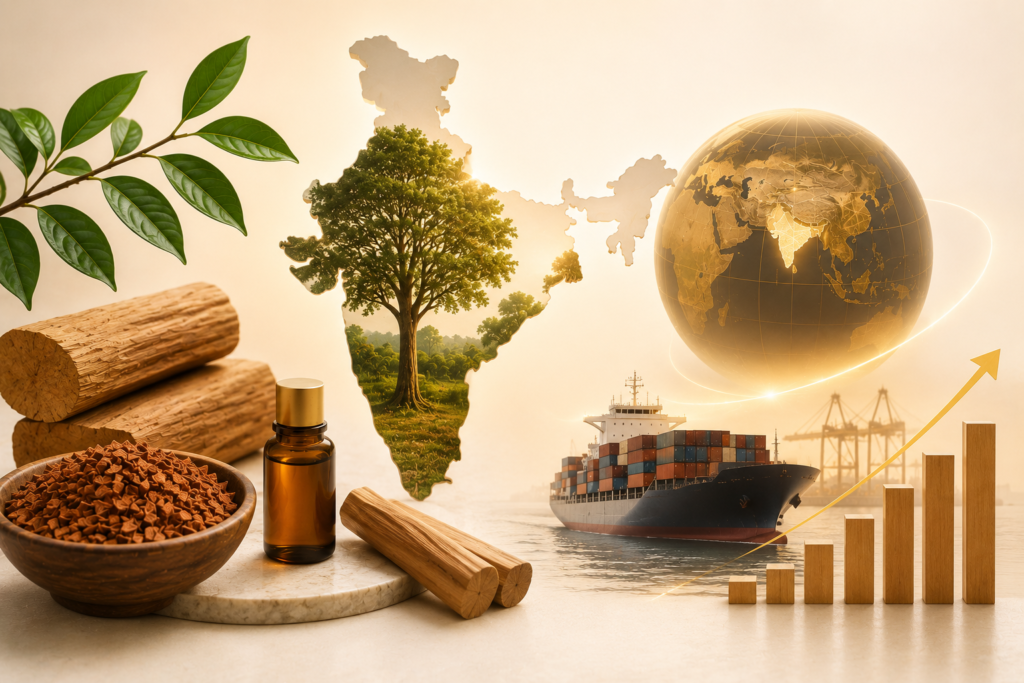
Economic Impact of Indian Sandalwood on India extends far beyond its spiritual and cultural significance. Few natural resources are as deeply connected to India’s economic and cultural heritage as sandalwood. Indian Sandalwood (Santalum album) has supported livelihoods, contributed to state revenues, and influenced regional economies for generations, particularly in Karnataka, the historic centre of India’s sandalwood industry. From rural farmers and artisans to industries and exports, this blog explores how sandalwood continues to contribute to India’s economy and the opportunities surrounding this valuable natural resource.
A Historically State-Controlled Resource
For much of the last century, sandalwood in India wasn’t just an economic asset, it was a government-controlled one. Rooted in policies dating back to the Kingdom of Mysore, Karnataka’s state government maintained a monopoly over sandalwood harvesting and trade for decades, treating the tree as government property even when it grew on private land.
This arrangement meant that sandalwood-related revenue flowed largely through state channels, with government-run facilities like Karnataka Soaps and Detergents Limited (KSDL) historically playing a central role in processing sandalwood oil and manufacturing well-known products like Mysore Sandal Soap, a brand that has become deeply tied to the state’s economic and cultural identity.
Contribution to State and National Revenue
Sandalwood has long been a meaningful contributor to Karnataka’s state revenue, generated through controlled harvesting, auctions of government-held sandalwood stock, and taxation on legal trade. Even as reforms have shifted more cultivation into private hands, government auctions of sandalwood still generate significant income, with high-quality logs commanding premium prices at state-run auctions due to their rarity and demand from both domestic and export markets.
At the national level, sandalwood and its derivative products, including oil, powder, and carved wood items, contribute to India’s broader export economy, with Indian Sandalwood oil in particular remaining a sought-after commodity in international perfumery and cosmetics markets due to its superior fragrance quality compared to other sandalwood species.
Employment Across the Value Chain
The sandalwood industry supports employment across multiple stages of production, from cultivation to final product manufacturing.
Farming and Plantation Work – As private sandalwood cultivation has expanded following regulatory reforms, more farmers and rural landowners have entered the sandalwood growing business, either independently or through partnerships with private plantation companies. While the long maturation period means many of these farmers won’t see direct financial returns for over a decade, plantation establishment and maintenance still generate ongoing agricultural employment in rural areas.
Oil Extraction and Processing – Sandalwood oil distillation facilities, particularly those concentrated around Mysore, employ skilled workers involved in the steam distillation process, quality testing, and oil grading. This processing stage adds significant value to raw sandalwood, transforming relatively low-value wood into high-value essential oil for export and domestic sale.
Woodcarving and Craftsmanship – Mysore’s centuries-old tradition of sandalwood carving continues to support a community of skilled artisans who produce idols, decorative items, and religious artifacts. This craft-based segment of the industry not only generates direct income for carvers but also supports tourism, as sandalwood carvings remain a popular souvenir and cultural product associated with the region.
Retail and Export Trade – Beyond production, sandalwood supports employment in retail, wholesale trade, and export logistics, connecting Indian sandalwood producers to international buyers across dozens of countries through established trade networks.
The Investment Opportunity in Sandalwood Farming
Following policy reforms that allowed private cultivation, sandalwood has increasingly been positioned as a long-term agricultural investment opportunity. Private companies now offer structured investment models where individuals can fund sandalwood plantations in exchange for a share of profits once trees mature and are harvested, decades later.
While this investment approach carries significant risk given the long time horizon and exposure to disease or market fluctuations, it has introduced a new source of rural capital investment, encouraging landowners to consider sandalwood as a viable long-term asset alongside more traditional short-cycle crops.
Government Initiatives Supporting the Industry
Recognizing sandalwood’s economic potential, Indian authorities have introduced several initiatives aimed at strengthening the legal sandalwood economy. These include efforts to streamline sandalwood oil processing and marketing through dedicated industry bodies, aimed at improving pricing transparency and quality standards for farmers and processors alike.
Additionally, relaxed regulations around private cultivation, along with technical support and subsidies in some states, reflect a broader government strategy to encourage legal, sustainable sandalwood farming as an alternative to relying solely on dwindling state forest reserves.
Challenges to Sustained Economic Impact
Despite its economic significance, several challenges threaten sandalwood’s long-term contribution to India’s economy:
- Long investment horizon: The 15 to 30 year maturation period limits how quickly new supply, and associated economic activity, can respond to rising demand.
- Disease pressure: Sandal spike disease continues to threaten both wild and cultivated sandalwood populations, posing an ongoing risk to future supply and associated revenue.
- Global competition: Australia’s growing, scientifically managed sandalwood industry presents increasing competition for India’s traditional dominance in the global market.
- Illegal trade: Continued smuggling and unregulated harvesting undermine the formal economy’s ability to fully capture the value of India’s sandalwood resources.
A Resource With Long-Term Economic Potential
Despite these challenges, sandalwood’s unique combination of cultural significance, industrial demand, and export value means it’s likely to remain economically important for India well into the future. As private cultivation continues to expand and government policies increasingly support sustainable, legal sandalwood farming, the industry has an opportunity to generate more broadly distributed economic benefits, extending beyond state-controlled forests into rural communities across multiple states.
Conclusion
Indian Sandalwood’s economic impact extends far beyond its role as a fragrant export commodity. From supporting rural livelihoods and skilled artisan communities to generating meaningful state and national revenue, sandalwood remains an economically significant resource for India. As the industry continues to shift toward sustainable, privately managed cultivation, its potential to generate long-term, widely shared economic benefits, while protecting this culturally significant tree for future generations, remains one of the more promising stories in India’s natural resource economy.