
Indian Sandalwood in Ayurveda, Perfumery and Cosmetics
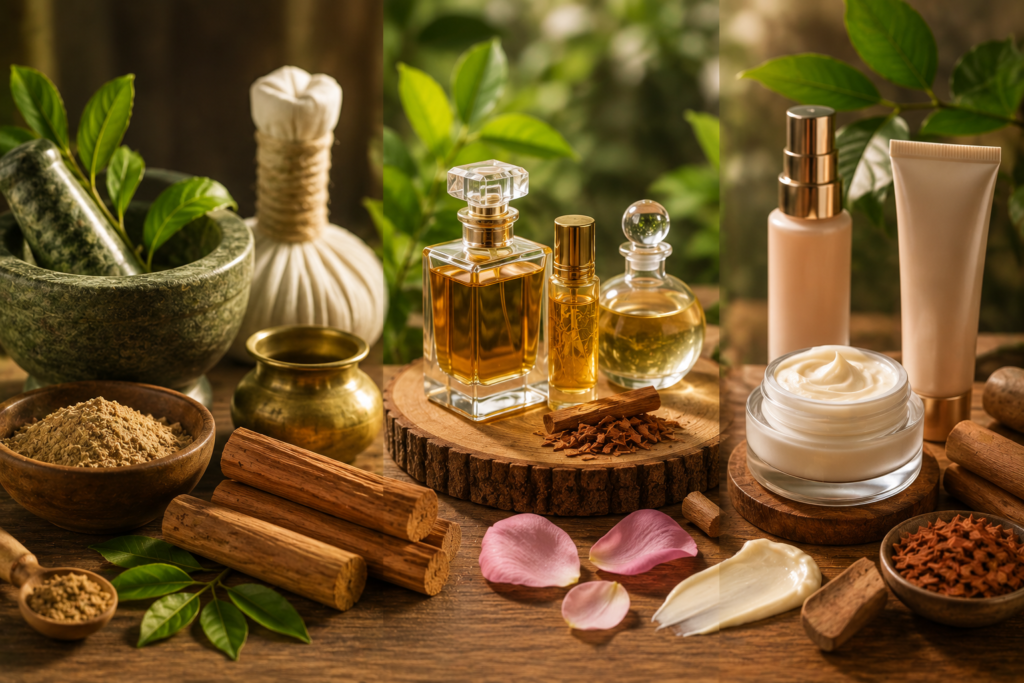
Indian Sandalwood in Ayurveda, Perfumery and Cosmetics highlights the remarkable versatility of Santalum album, one of the world’s most valued natural ingredients. For centuries, sandalwood has been an important part of Ayurvedic practices, while its distinctive fragrance has made it a prized ingredient in traditional and modern perfumery. Today, sandalwood also features prominently in skincare and cosmetic formulations, valued for its fragrance and naturally occurring compounds. Few plants have successfully connected traditional wellness practices with the modern beauty and fragrance industries as seamlessly as Indian Sandalwood. This blog explores the journey of sandalwood across Ayurveda, perfumery, and cosmetics, and examines why it continues to hold such significance in each of these fields.
Sandalwood in Ayurveda
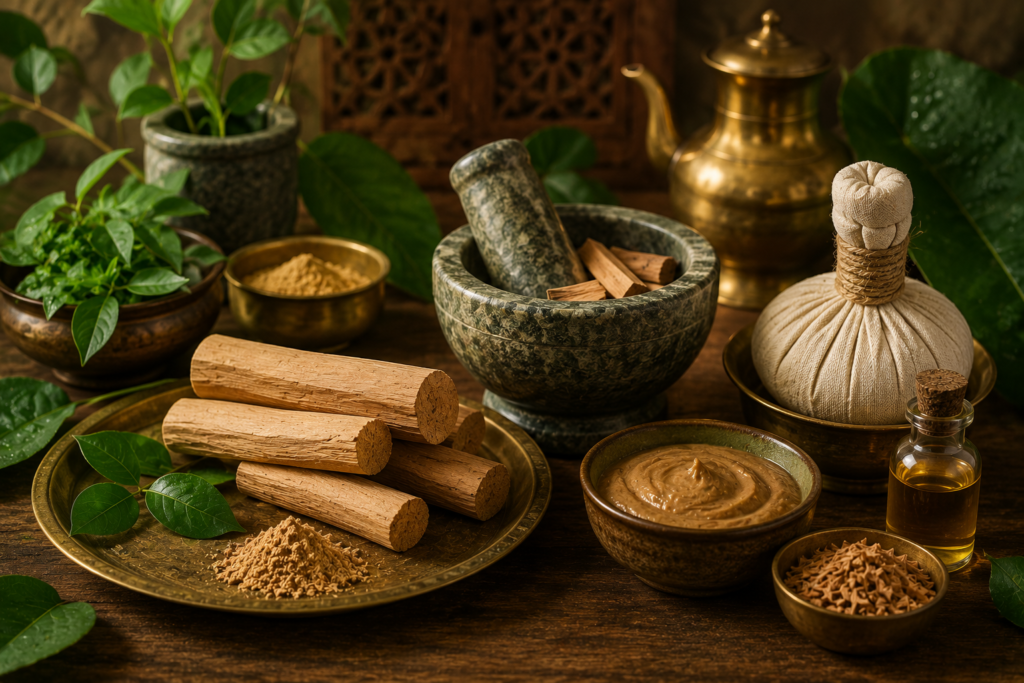
Ayurveda, India’s ancient system of traditional medicine, has valued sandalwood for thousands of years, referring to it as “Chandana” in Sanskrit texts. Within Ayurvedic philosophy, sandalwood is classified as a cooling substance, making it especially useful for balancing “Pitta dosha,” which governs heat and inflammation in the body.
Cooling and Calming Properties – Sandalwood paste has traditionally been applied to the skin to relieve heat-related conditions such as rashes, sunburn, and inflammation. Its cooling effect is also believed to help calm the mind, which is why sandalwood is frequently used in Ayurvedic practices aimed at reducing stress and promoting mental clarity.
Skin and Wound Care – Ayurvedic practitioners have long used sandalwood paste to treat various skin conditions, including acne, blemishes, and minor wounds, thanks to its natural antibacterial and anti-inflammatory properties. It’s often combined with other ingredients like turmeric or rose water to enhance its soothing effects.
Respiratory and Digestive Support – Beyond topical use, sandalwood has also been used in traditional formulations aimed at supporting respiratory health, often included in remedies for coughs and throat irritation. Some Ayurvedic preparations also incorporate sandalwood for its believed digestive benefits, though such uses are typically part of broader herbal formulations rather than standalone treatments.
Meditation and Spiritual Practices – Sandalwood’s calming aroma has made it a staple in meditation and spiritual practices for centuries. It’s commonly burned as incense or applied as a paste to the forehead during meditation, believed to help focus the mind and create a sense of spiritual grounding.
Sandalwood in Perfumery
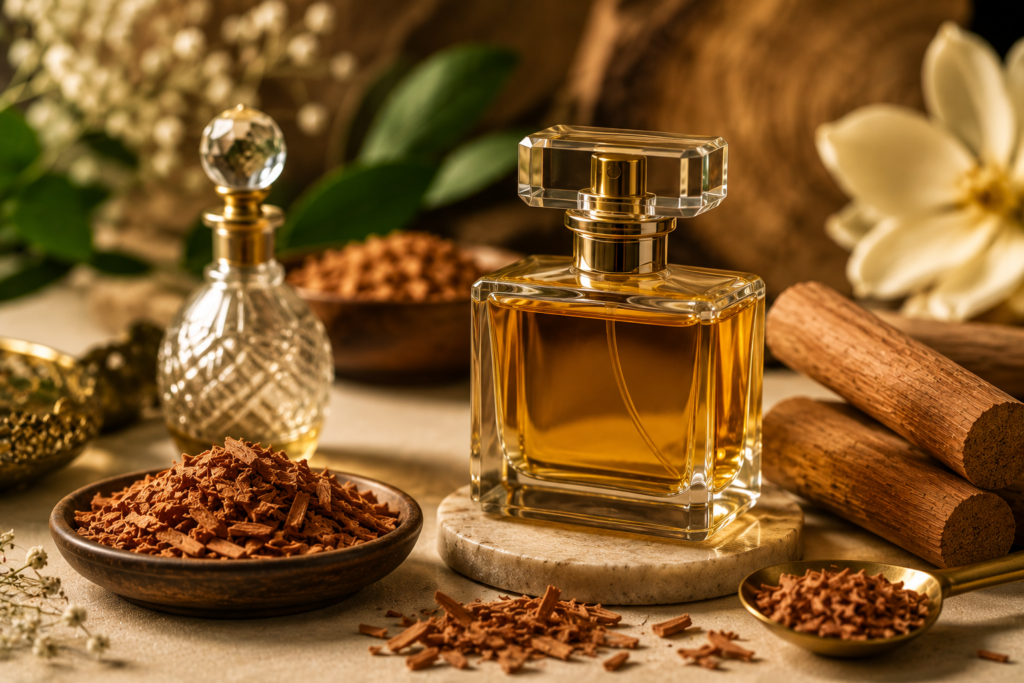
Beyond its medicinal roots, sandalwood has become one of the most sought-after ingredients in the global fragrance industry, prized for both its scent and its functional properties in perfume formulation.
A Natural Fixative – One of sandalwood’s most valuable properties in perfumery is its role as a fixative. Its dense, slow-evaporating molecular structure helps “anchor” lighter fragrance notes, allowing perfumes to last significantly longer on the skin. This is why sandalwood is frequently used as a base note, providing depth and longevity to a fragrance’s overall composition.
Versatility in Blending – Sandalwood’s warm, creamy, and subtly sweet aroma pairs well with a wide range of other fragrance notes, including florals like rose and jasmine, spices like cardamom and saffron, and other woody or musky ingredients. This versatility has made it a foundational element in countless iconic perfumes across various fragrance families, from oriental to woody to floral compositions.
A Marker of Luxury – As genuine Indian Sandalwood oil is so rare and expensive, its inclusion in a perfume is often seen as a marker of luxury and quality. Many high-end fragrance houses proudly feature sandalwood as a key ingredient, leveraging its prestigious reputation to position their products as premium offerings.
Sandalwood in Cosmetics
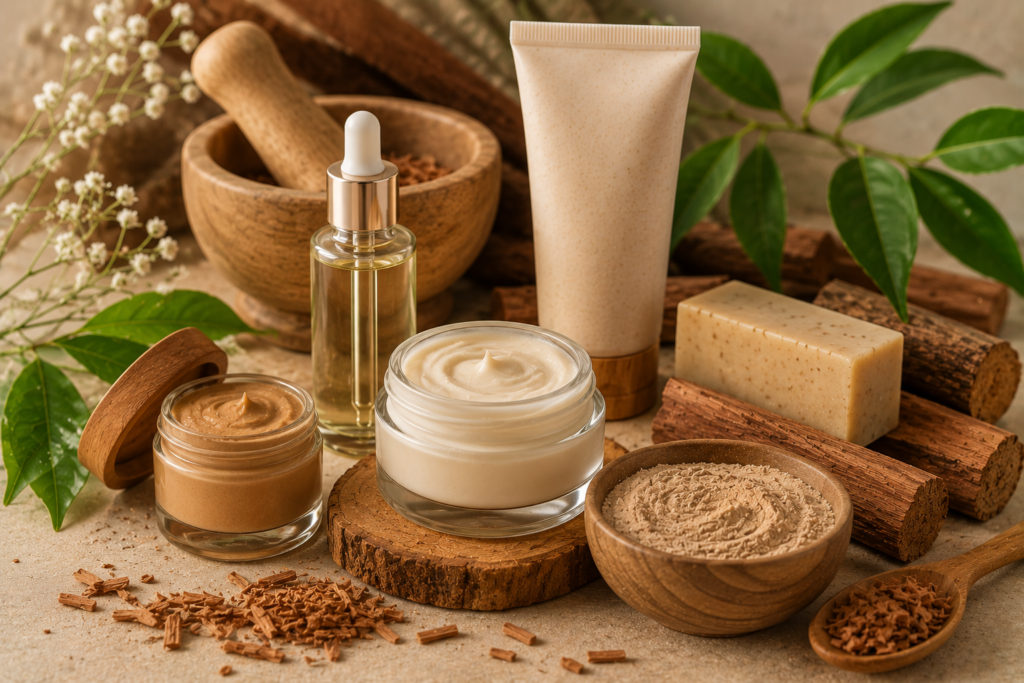
The same properties that make sandalwood valuable in Ayurveda and perfumery have also secured its place in modern cosmetic formulations, particularly in skincare products aimed at soothing and improving skin health.
Anti-Inflammatory and Antibacterial Benefits – Sandalwood’s natural anti-inflammatory and antibacterial properties make it a popular ingredient in products targeting acne-prone or sensitive skin. It’s often included in face washes, spot treatments, and creams designed to calm irritation and reduce redness.
Anti-Aging Applications – Some skincare formulations incorporate sandalwood for its purported ability to improve skin elasticity and reduce the appearance of fine lines, often paired with other active ingredients like vitamin C or hyaluronic acid in modern anti-aging products.
Brightening and Even-Toning – Sandalwood is frequently marketed in face packs and masks aimed at improving skin tone and radiance, building on its traditional use in Ayurvedic beauty rituals where it was combined with ingredients like turmeric and milk to create brightening pastes.
Fragrance in Personal Care Products – Beyond its active skin benefits, sandalwood’s pleasant, long-lasting aroma makes it a popular fragrance component in soaps, body lotions, and even haircare products, offering a subtle, natural scent that appeals to a broad range of consumers.
The Common Thread Across All Three Industries
What connects Ayurveda, perfumery, and cosmetics in their use of sandalwood is a shared appreciation for its dual functional and sensory properties. Whether it’s calming inflamed skin in an Ayurvedic remedy, anchoring a complex fragrance blend, or soothing irritation in a modern face cream, sandalwood consistently delivers both a therapeutic benefit and a distinctive, pleasant aroma; a rare combination not found in many natural ingredients.
The Challenge of Authenticity
As demand for sandalwood grows across all three industries, so does the risk of encountering diluted or synthetic alternatives. Whether buying sandalwood oil, skincare products, or perfumes claiming to contain sandalwood, it’s worth checking for proper labeling, ideally specifying Santalum album, and purchasing from reputable brands that source their sandalwood sustainably and transparently.
Conclusion
Indian Sandalwood’s journey from ancient Ayurvedic remedy to modern luxury perfume ingredient and skincare staple reflects its truly unique versatility. Few natural ingredients manage to remain relevant across such vastly different industries for thousands of years, yet sandalwood continues to prove its worth in traditional healing, high-end fragrance, and everyday beauty products alike. As awareness around sustainable sourcing grows, sandalwood’s legacy across these fields looks set to continue well into the future.