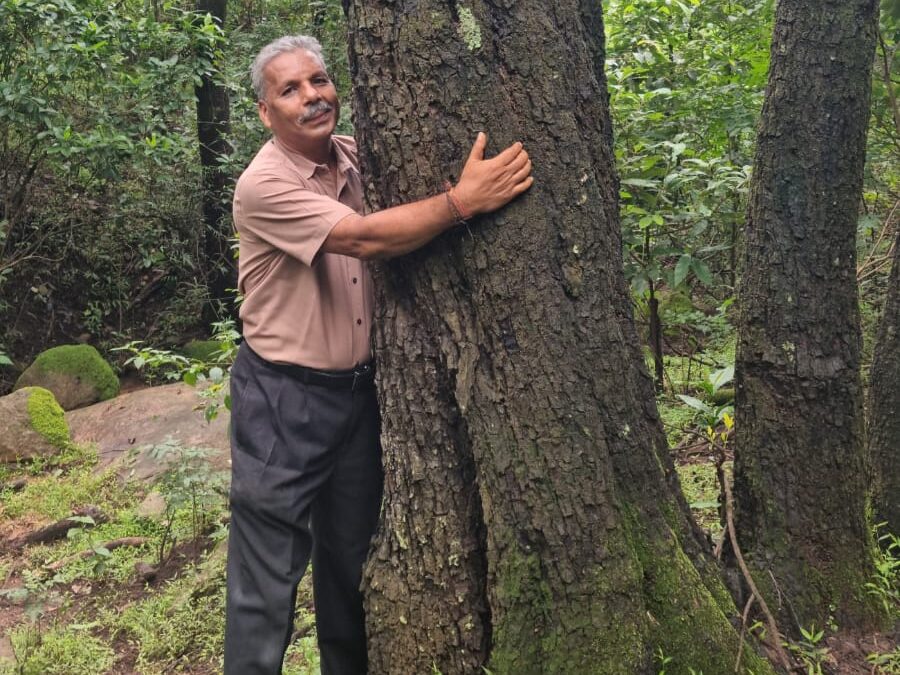
Future of Sandalwood Cultivation in India
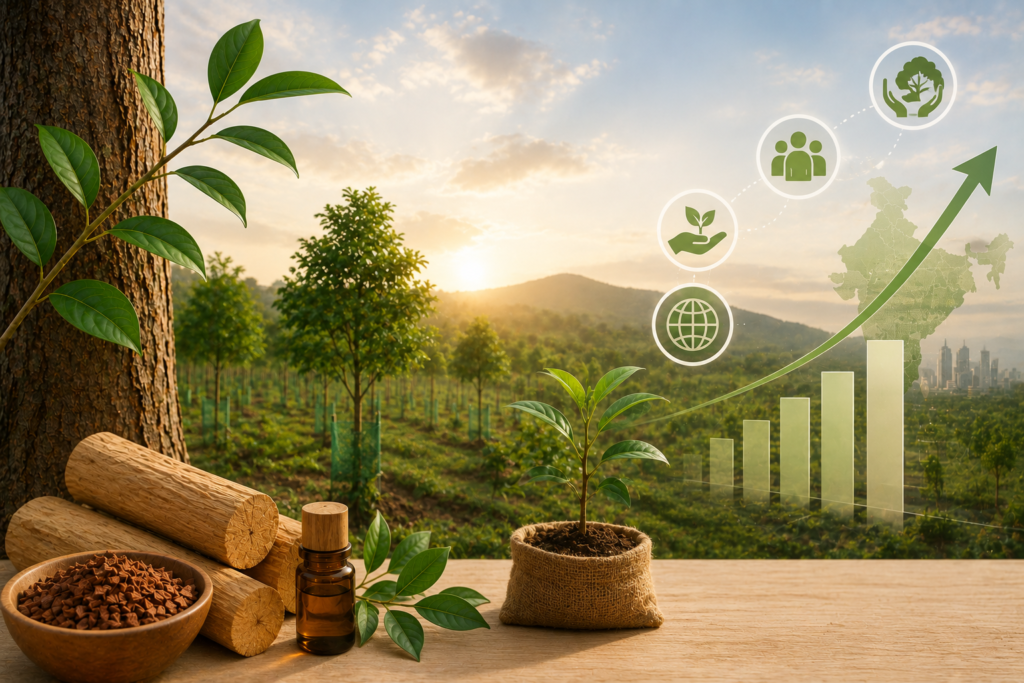
The Future of Sandalwood Cultivation in India finally appears to be entering a new, more promising chapter. After decades of restrictive regulation, illegal logging, and a steady decline in wild populations, Indian sandalwood has seen renewed government attention, emerging biotechnology, and growing farmer interest; the future of Santalum album farming in India looks quite different from its recent past. This blog explores where sandalwood cultivation in India is heading and what factors will likely shape its trajectory in the years ahead.
A Renewed Policy Push
One of the clearest signals of sandalwood‘s changing fortunes came with the Union Budget 2026, where the central government specifically highlighted sandalwood as a priority crop tied to India’s cultural heritage. The Finance Minister announced plans for the central government to partner with state governments to promote focused cultivation and post-harvest processing, explicitly aiming to restore what officials described as the “glory” of India’s sandalwood ecosystem.
This followed the release of a Sandalwood Development Committee report, which recommended treating sandalwood as a farmer’s produce rather than a restricted forest resource, alongside proposals for improved training, marketing support, and streamlined production processes. Industry representatives, including the All India Sandalwood Tree Culture Association, welcomed the announcement as a meaningful step toward encouraging more farmers to take up cultivation.
Why Farmer Ownership Remains the Central Challenge
Despite this policy attention, experts note that real reform depends less on budget announcements and more on how ownership, permitting, and felling rules are actually rewritten on the ground. Following earlier liberalization, farmers are estimated to be growing sandalwood on roughly 11,000 hectares across India, a meaningful start, but still relatively small compared to the scale needed to meaningfully reduce import dependence. Notably, even government-linked processors like Karnataka Soaps and Detergents Limited reportedly still import a significant share of the sandalwood oil they use each year.
The core tension facing policymakers is a long-standing one: sandalwood was historically treated as government property in key producing states, creating a system where farmers faced a discouraging proposition, spend a decade or more growing a tree, only to face a maze of permits and inspections once it became valuable. Historical data illustrates the cost of this approach starkly, with annual sandalwood production reportedly falling from around 4,000 tonnes in the 1950s to just a few hundred tonnes by the early 2000s, even as global demand remained strong. Going forward, experts widely agree that simplifying transit and felling rules, alongside stronger extension support and research investment, will be essential to unlocking broader farmer participation.
Geographic Expansion Beyond Traditional Growing Regions
One notable trend shaping sandalwood’s future is its expansion well beyond its traditional strongholds of Karnataka and Tamil Nadu. Increasing numbers of farmers in non-traditional states, including Gujarat, Rajasthan, Andhra Pradesh, Madhya Pradesh, and Maharashtra, have taken up sandalwood cultivation over the past decade, drawn by strong heartwood prices and growing confidence in the crop’s viability outside its native range.
This geographic diversification could play an important role in India’s future sandalwood supply, reducing overreliance on traditional growing regions while giving more farmers across the country access to a high-value, long-term crop option.
Advances in Cultivation Technology and Biotechnology
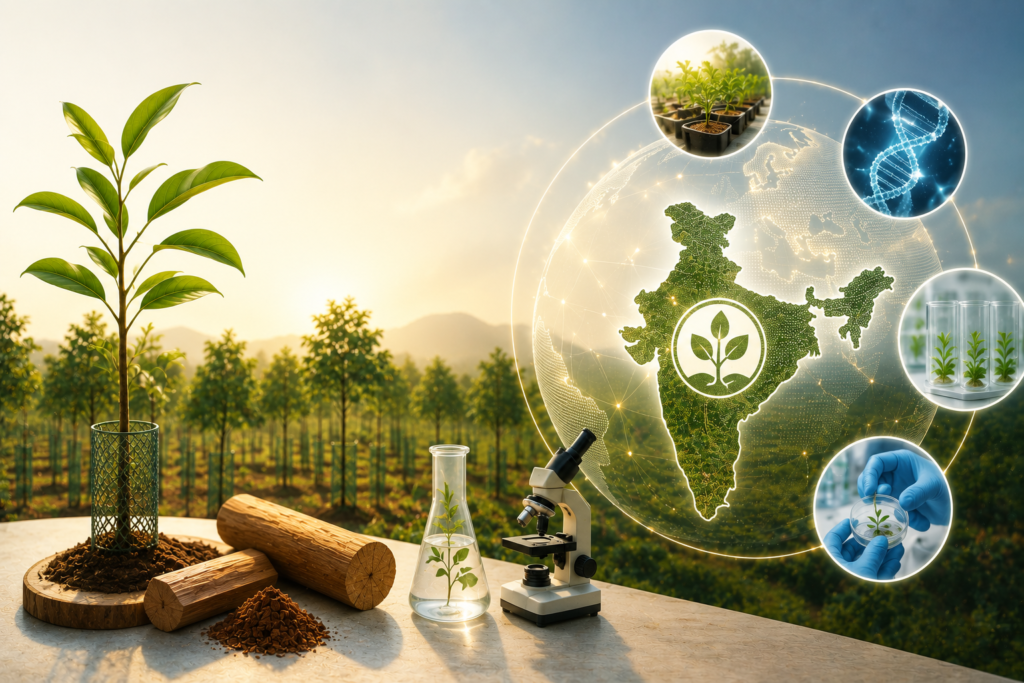
Technological innovation is increasingly expected to play a central role in the future of sandalwood cultivation in India. Several areas of advancement stand out:
Faster Heartwood Development
Traditionally, sandalwood was believed to take 20 to 30 years to develop significant heartwood. However, more recent research and improved cultivation practices suggest that with modern techniques, trees can begin forming meaningful heartwood by around 15 years of age, and some studies have identified heartwood initiation beginning as early as 6 to 8 years under favorable conditions. This shift, if it holds up at scale, could significantly improve the economics of sandalwood farming for future growers.
Tissue Culture and Quality Planting Material
A recurring concern among sandalwood farmers has been the lack of access to high-quality, disease-free planting material. Advances in tissue culture and mini-clonal propagation techniques are increasingly being positioned as key tools for mass-producing reliable, genetically consistent sandalwood saplings, helping improve survival rates and reduce disease risk in new plantations.
Genomic and Breeding Research
As covered in earlier research on sandalwood genetics, improved genome sequencing and emerging genomic selection techniques are expected to eventually support breeding programs aimed at developing trees with higher oil content, faster maturation, and greater disease resistance, particularly against sandal spike disease.
Precision Agriculture
Broader agricultural technology trends, including precision farming techniques, are also being explored as tools to improve sandalwood yield consistency and sustainability, helping farmers better manage host plant relationships, irrigation, and soil health throughout the tree’s long growth cycle.
Sandalwood-Based Agroforestry as a Growth Model
Given sandalwood’s hemi-parasitic nature and compatibility with mixed-species farming systems, agroforestry is increasingly viewed as a key strategy for scaling future cultivation. Research has specifically highlighted sandalwood-based agroforestry as a promising approach for doubling farmer incomes, particularly in semi-arid and abiotically stressed regions where combining sandalwood with horticultural or other cash crops can provide more consistent income during sandalwood’s long maturation period.
This agroforestry-based approach also aligns with broader sustainability goals, supporting biodiversity, soil health, and diversified farmer income streams alongside long-term sandalwood production.
Balancing Conservation with Commercial Growth
As cultivation expands, experts widely emphasize the need to balance commercial growth with continued conservation of remaining wild sandalwood populations. International trade regulations already help regulate sandalwood trade to prevent further overexploitation, though such measures have historically had mixed results, helping stabilize legal supply chains while occasionally fueling black market activity due to bureaucratic complexity.
Looking ahead, many researchers advocate for a more balanced regulatory approach: maintaining strict protections for remaining wild forest stands, while creating clear, simplified rules, combined with traceability and certification systems, for private and community-based cultivation. Such a system would aim to give buyers confidence in product authenticity while giving farmers a realistic, low-friction path to legally growing and selling sandalwood.
The Road Ahead for Farmers
For individual farmers considering sandalwood cultivation, the future likely hinges on how effectively current policy discussions translate into practical, on-the-ground reforms. Key areas farmers and industry advocates continue to push for include:
- Access to certified, disease-free planting material to improve survival rates and reduce long-term risk.
- Simplified permitting and transit rules to reduce bureaucratic barriers once trees reach maturity.
- Credit and insurance products tailored to sandalwood’s unusually long investment horizon.
- Stronger plantation security measures to address ongoing theft and illegal logging risks.
- Expanded extension services and training programs to help farmers, especially in non-traditional regions, successfully manage host plants and disease risks.
A Cautiously Optimistic Outlook
While challenges remain, particularly around translating policy attention into concrete, farmer-friendly reforms, the overall trajectory for sandalwood cultivation in India appears more promising than it has in decades. Renewed government focus, expanding geographic cultivation, ongoing biotechnology advances, and growing interest in agroforestry-based models together suggest a future where India could meaningfully rebuild its sandalwood production capacity, provided reforms continue moving from announcements toward practical implementation on the ground.
Conclusion
The future of sandalwood cultivation in India sits at an important inflection point. After decades of restrictive control that inadvertently suppressed legal production, growing political, scientific, and farmer-level momentum suggests real potential for meaningful change. Whether India can successfully rebuild its position as a global sandalwood leader will likely depend on how effectively policymakers turn recent commitments into practical, farmer-centered reforms, alongside continued investment in disease management, planting material quality, and sustainable, diversified cultivation systems across the country.